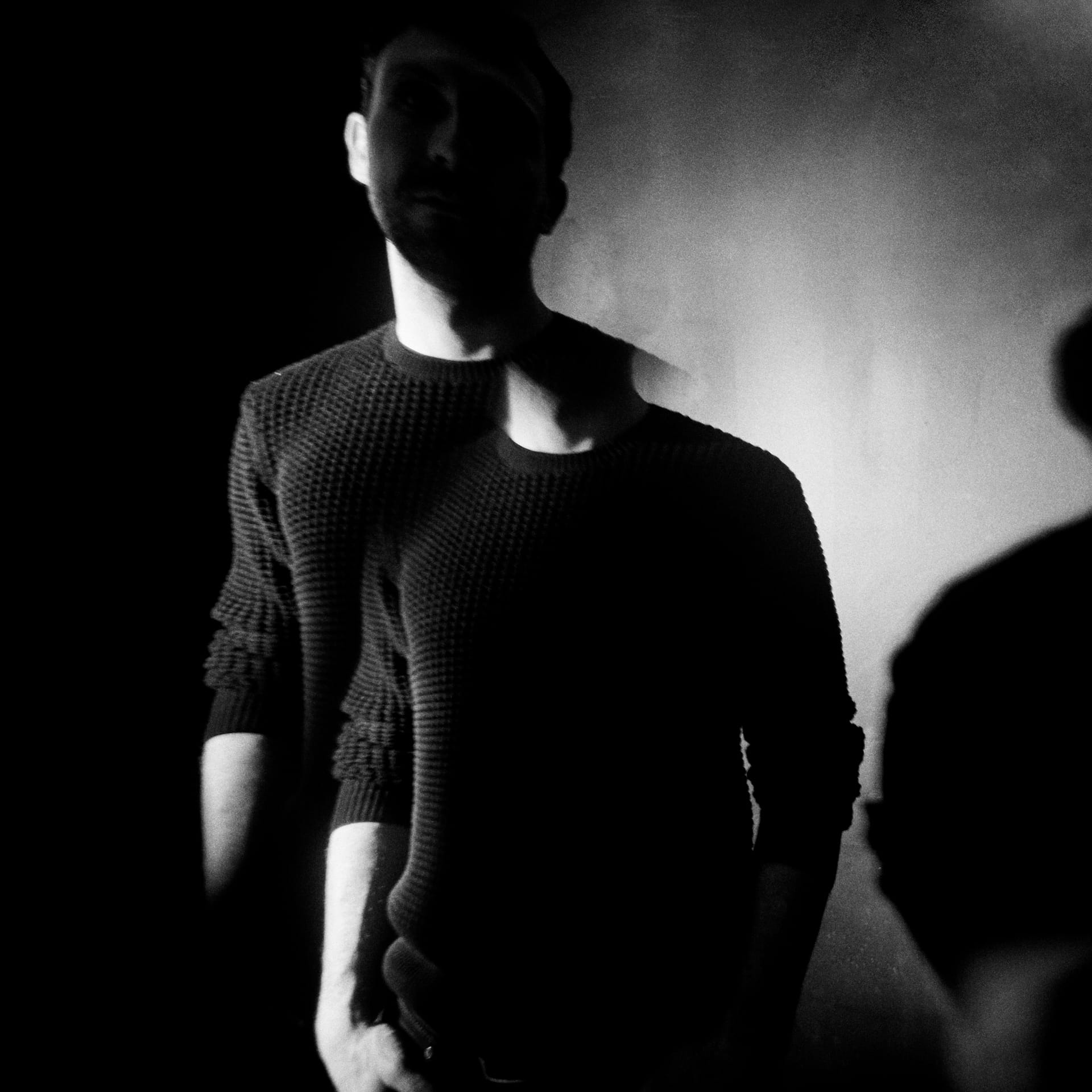

EDITORIAL: The Architecture of Solitude
The Paradox of Urban Solitude
Eight million people in New York. Thirty-seven million in Tokyo. Yet loneliness in cities exceeds rural rates by 40%. The closer we pack humans together, the more alone they feel. This isn't a bug. It's becoming a feature.
In Tokyo, there are restaurants where you eat in solo booths facing a wall. In New York, Bryant Park's chairs are deliberately moveable, letting strangers create distance. In Copenhagen, apartment buildings include "flex rooms" – spaces for one. Cities aren't just building for crowds anymore. The spaces around us are increasingly being designed for isolation.
"The city is not just a collection of buildings, but a collection of possibilities for being alone in public."
— Jan Gehl, urban design consultant
Walk through any major city in 2024 and count the infrastructure of isolation:
- Phone booths in co-working spaces
- Single-seat dining counters facing walls
- One-person karaoke rooms
- Solo meditation pods in airports
- Individual workout chambers at gyms
These aren't accommodations for loneliness. They're celebrations of chosen solitude.

Micro-Living, Macro-Privacy
In Hong Kong, apartments average 170 square feet. In San Francisco, micro-units of 220 square feet rent for $2,000. These spaces aren't just small – they're precisely calibrated for one.
The architecture includes:
- Murphy beds that transform rooms
- Kitchenettes for cooking alone
- Bathroom doors that open inward (no room for two)
- Single-person balconies
- Storage optimized for one wardrobe
Micro-Apartment Standards by City
- Tokyo: Minimum 25 square meters (269 sq ft)
- New York: Minimum 400 sq ft (recent reduction from 450)
- London: Minimum 37 square meters (398 sq ft)
- Hong Kong: No minimum (average 170 sq ft)
- San Francisco: Minimum 220 sq ft (reduced from 290)

Public Solitude Infrastructure
Parks: The Alone Together Zones
Bryant Park's 5,000 moveable chairs aren't random. They're a master class in choice architecture. Unlike fixed benches that force proximity, loose chairs let visitors create their own social distance.
The data is striking:
- 68% of visitors come alone
- Average distance between strangers: 8 feet
- Peak "alone time": weekday lunches
Libraries: Sanctuaries of Silence
Modern libraries aren't just digitizing – they're atomizing. The New York Public Library's renovation included:
- 40% more individual study spaces
- Sound-masking technology
- Booking apps for solo rooms
- "Silent floors" with no collaboration
"Libraries used to be about sharing knowledge. Now they're about protecting solitude."
— Francine Houben, Mecanoo Architects
The Commerce of Solitude
Eating Alone, By Design
Japan pioneered solo dining infrastructure. Now it's global:
Ichiran Ramen's "Flavor Concentration Booths":
- Dividers between every seat
- Orders placed via vending machine
- Staff interaction through bamboo blinds
- No eye contact required
Eenmaal Restaurant, Amsterdam:
- Tables for one only
- No WiFi (enforced solitude)
- Four-course meals in silence
- Booked solid for two years

Solo Dining Statistics
- 35% of restaurant visits are now solo (up from 18% in 2014)
- Solo diners spend 50% less time per meal
- They tip 3% higher on average
- 72% prefer counter/bar seating over tables
Retail Therapy, Party of One
The future of shopping arrived not with fanfare but with silence. Amazon Go opened its first store in 2018, promising "Just Walk Out" technology. No lines, no checkout, no human contact. Critics called it dystopian. Customers called it perfect.
Four years later, the model has spread beyond tech experiments. Target expanded self-checkout from 2 to 10 lanes per store. Uniqlo's automated registers now outnumber human cashiers three to one. Even luxury retailers – once bastions of personal service – offer "ghost shopping" where selections are texted, payments processed online, and packages left for contactless pickup.
This isn't about efficiency anymore. It's about emotional labor. Every interaction demands performance – the smile, the small talk, the dance of "did you find everything?" and "I'm just browsing." The infrastructure of solo shopping removes this burden. You enter alone, shop alone, leave alone. The only judgment comes from your credit card.

Best Buy's evolution tells the story. Their "Store Mode" app doesn't just show inventory; it actively helps customers avoid staff. Heat maps show employee locations. Product information eliminates the need to ask questions. Mobile checkout bypasses the register entirely. The company that once prided itself on the "Blue Shirt" service experience now profits from helping customers avoid it.
Even social shopping is becoming solitary. Nordstrom's personal styling service moved from in-store appointments to text-based relationships. Stylists never meet clients. Selections arrive by mail. Feedback happens via emoji reactions. The intimacy of understanding someone's taste without ever hearing their voice.
Transportation: Moving Alone, Together
Public transit was meant to be the great equalizer. Rich and poor, pressed together in democratic discomfort. The subway would create community through forced proximity. Buses would be rolling town squares. Instead, we chose isolation at any cost.
When Uber launched Pool in 2014, the economics seemed obvious. Share rides, split costs, reduce emissions. The company spent millions on algorithms to optimize multi-passenger routes. They offered 50% discounts for sharing. Still, 73% of users paid extra to ride alone. Pool shut down in 2020, allegedly for pandemic safety. It never returned. Nobody asked why.
The pattern repeats across transportation. Amtrak's quiet cars expanded from one per train to three. Airlines monetized middle seat avoidance – pay $89 to guarantee an empty neighbor. CitiBike overtook bus ridership in Manhattan not because it's faster (it isn't) but because it's solitary. You pedal in your own bubble, earbuds in, following Google Maps' blue line, never asking for directions.

Walking itself has been redesigned for isolation. Seoul and Chongqing painted "phone lanes" on sidewalks – dedicated paths for those walking while texting. London's Exhibition Road removed the distinction between sidewalk and street entirely, creating "shared space" that actually means "figure it out yourself." New York's High Line elevated park includes single-file sections deliberately too narrow for walking together. The design forces separation.
Cities track pedestrian flow like water through pipes now. Wider sidewalks don't encourage gathering; they prevent bottlenecks. Those refuge islands in the middle of broad streets aren't for safety – studies show they barely reduce accidents. They're for waiting alone, a temporary island between flows of humanity where you don't have to negotiate space with strangers.
Digital Layers of Alone
Physical infrastructure is just the foundation. The real architecture of solitude is digital, invisible, and infinitely customizable. Every smartphone is a portable isolation chamber. Every app is a door you can close.
Consider the modern coffee shop. Twenty years ago, it was a "third place" – neither home nor work, but a social hub. Watch one today. Every laptop is a wall. Every screen faces away from neighbors. The WiFi password is shared wordlessly, pointed to on a sign. Conversations happen on Zoom calls, one participant present, speaking to the void through AirPods. The same physical space hosts dozens of separate realities.

Spotify alone serves 450 million monthly users, each in their own sonic bubble. The "Discover Weekly" playlist is deliberately individual – no two are alike. The algorithm ensures your soundtrack is yours alone, creating what sociologist Sherry Turkle calls "communion without communication." You feel connected to artists and other listeners without ever encountering them.
Apps That Eliminate Human Contact
- Food: DoorDash, Uber Eats (no restaurant interaction)
- Groceries: Instacart (no store interaction)
- Dating: Tinder (no bar interaction)
- Therapy: BetterHelp (no waiting room)
- Doctors: Teladoc (no office visit)
- Banking: Venmo (no teller needed)
But it goes deeper than convenience apps. Augmented Reality promises to complete the separation. Apple's Vision Pro headset, launched in 2024, allows users to be physically present but visually elsewhere. Sit in a crowded subway while watching a movie in a virtual theater. Work in a busy café while your screen shows a mountain vista. The body is public. The experience is private.
The implications cascade. Why design beautiful public spaces if everyone sees them through a filter? Why create gathering places if gathering is optional? Why force interaction if technology offers escape?
The Psychology of Chosen Isolation
The critical distinction often gets lost in hand-wringing about loneliness epidemics: solitude and loneliness are not the same thing. Dr. Jenny Taitz, a clinical psychologist at UCLA, has spent a decade studying urban isolation. Her research reveals something counterintuitive – people who regularly choose solitude report higher life satisfaction than those who never do.
"Loneliness is the subjective experience of unwanted isolation," Taitz explains. "Solitude is chosen aloneness. The city dwellers who struggle aren't those who eat alone or live alone. They're the ones who have no choice in the matter. Infrastructure that enables chosen solitude actually reduces loneliness by giving people agency."

The productivity benefits are measurable. A 2021 study by Microsoft's Human Factors Lab found that workers who could control their level of interaction showed 74% higher creative output. Problem-solving improved by 50%. Stress hormones dropped by 62%. The key wasn't isolation itself but the ability to choose it.
This reframes urban solitude infrastructure entirely. Those solo dining booths aren't accommodating antisocial behavior; they're enabling selective social engagement. The phone booth in the open office isn't about hiding; it's about choosing when to be available. The moveable chair in the park isn't avoiding others; it's controlling distance.
Urban planner Jan Gehl, who redesigned Copenhagen's public spaces, puts it simply: "The city is not just a collection of buildings, but a collection of possibilities for being alone in public. The 20th century asked 'How do we bring people together?' The 21st century asks 'How do we give them the choice?'"
Global Variations
Tokyo perfected urban solitude because it had no choice. With 37 million people in the metropolitan area, privacy becomes a luxury good. The city's response wasn't to force community but to engineer isolation. The result is a masterclass in solo infrastructure: 2,400 manga cafés offer individual booths rented by the hour, complete with computer, reclining chair, and unlimited drinks. No interaction required beyond the initial payment.
The city's 890 capsule hotels take this further. Originally designed for businessmen who missed the last train, they've evolved into chosen isolation chambers. The new Nine Hours hotel in Shinjuku doesn't even pretend to be about sleep. Capsules rent for "refresh" periods during the day. Office workers book them for lunch breaks. Students use them for studying. The capsules are smaller than prison cells, but that's the point. They're wombs with WiFi.
Copenhagen took the opposite approach, building solitude into spaciousness. The city mandates "flex rooms" in all new apartment buildings – spaces designed for one person that can be added to any unit. These aren't bedrooms or offices but dedicated solitude spaces. The Danish concept of hygge, often mistranslated as "cozy togetherness," originally meant "finding comfort in one's own company." The city's architecture reflects this. Single-person saunas at public pools. Café tables with individual reading lamps. Park benches designed for one, not two.
New York monetized solitude because of course it did. The average micro-studio in Manhattan now costs $3,000 per month for 200 square feet. That's $15 per square foot – more expensive per area than most luxury apartments. But renters aren't paying for space. They're paying for the right to be alone in the densest city in America. The premium for solitude exceeds the premium for luxury.
Meditation studios exploded from 2 in 2015 to 14 by 2024, charging $30 for 30 minutes of sitting quietly. MNDFL on Greenwich offers "silent meals" for $45 – you eat alone, in silence, with others doing the same. The Quiet Events company hosts "silent parties" where hundreds dance to music only they can hear through individual headphones. Together alone, at premium prices.
The Future of Urban Solitude
The next decade's urban planning documents read like science fiction. Autonomous vehicles won't just be transportation; they'll be mobile private rooms. Ford's concept designs include opacity glass, noise cancellation, and even scent customization. Your commute becomes a programmable isolation chamber.
Sidewalks will stratify further. Proposals in Singapore include "speed lanes" with different walking paces, but also "interaction levels" – green for open to contact, yellow for limited interaction, red for do not disturb. Your preference broadcasts from your phone, creating dynamic social distances.
Architecture firms are designing "gradient buildings" where public space gradually becomes private through layers of infrastructure. Enter through a grand lobby, but each floor becomes progressively more isolated. By the top floor, you might never see another resident.

The resistance to this future is real but fragmented. Sarah Williams, professor of urban studies at MIT, leads the charge against what she calls "antisocial infrastructure." Her argument is both practical and philosophical: "We're building cities for the privileged to avoid each other. The wealthy buy isolation while the poor are forced into proximity. This isn't solving loneliness; it's stratifying it."
Williams points to the cost of solitude. That meditation studio charges more per hour than minimum wage. The solo dining booth requires smartphone ordering that excludes the unbanked. Micro-apartments price out families who need space, not privacy. Every infrastructure of isolation has a price tag that sorts people into those who can afford to be alone and those who can't.
Designing Your Own Solitude
But beyond apps and infrastructure, the real shift is psychological. The new social contract isn't about tolerating others for efficiency. It's about choosing your level of engagement moment by moment. This isn't antisocial – it's post-social. A recognition that being alone in public is not a failure of community but a form of it.
The morning commuter wearing noise-cancelling headphones isn't rejecting the world; they're managing their exposure to it. The solo diner isn't friendless; they're choosing contemplation over conversation. The person working alone in a crowded café isn't isolated; they're selectively present.
Cities are finally acknowledging what introverts always knew: forced interaction isn't community. Real community comes from chosen connection. And sometimes, the kindest thing a city can do is leave you alone.
Finding Solo Spaces:
- WHA (quiet space finder)
- Breather (private room rentals)
- Nookzy (solo-friendly venues)
Creating Boundaries:
- Krisp (noise cancellation)
- Forest (phone blocking)
- Freedom (internet blocking)
Solo Activities:
- Meetup (single-person events)
- ClassPass (individual workouts)
- Headspace (guided isolation)
Epilogue: The Right to Be Alone
Louis Brandeis called privacy "the right to be let alone" in 1890. He was worried about newspapers and photography. He couldn't have imagined cities with 30 million people, smartphones that track every movement, or social networks that monetize every connection. But his fundamental insight remains: solitude isn't just a preference. It's a human right.
The 20th century gave us the right to the city – the idea that urban space belongs to everyone. The 21st century is giving us the right to solitude within it. Not isolation, not loneliness, but the choice to be alone when we need it, how we need it, for as long as we need it.
Walk through your city tomorrow with new eyes. Count the infrastructure of isolation. The phone booths in co-working spaces, the single seats at restaurant counters, the dividers and pods and chambers. They're not symptoms of urban disease or social breakdown. They're architecture for a new kind of human – one who can be alone and together in the same breath, who can choose connection rather than suffer it, who can find solitude on a crowded street.
The city of the future won't force us together or push us apart. It will give us the choice. And maybe that's exactly what we needed all along.