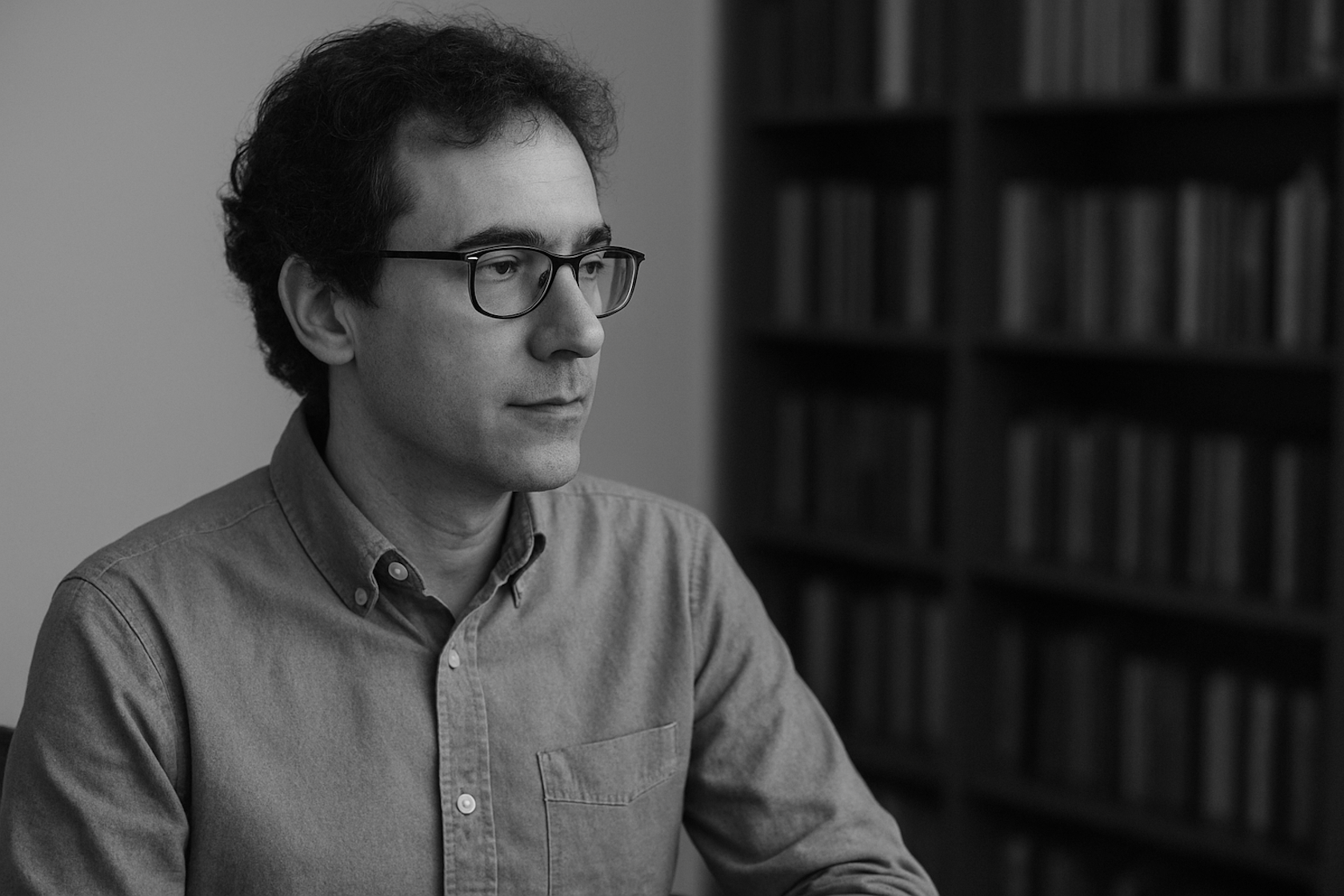
INTERVIEW with Prof. Adrian Kellerman: “Nobody Wants to Work Forever"
Adrian Kellerman doesn't have social media. His phone stays in his car. He writes books on legal pads. He also produces more quality work than anyone with notifications turned on. We talked about deep work, digital minimalism, and why he thinks the future of knowledge work looks more like 1950 than 2050.
You've called email "a catastrophe for human cognition." That's strong language for an inbox.
Right? But I stand by it. We took the most powerful thinking machine ever evolved – the human brain – and decided to interrupt it every six minutes. That's the average time between email checks for knowledge workers. Six minutes! We wouldn't tolerate a factory where the assembly line stops every six minutes so workers can sort mail. But that's exactly what we've done to thinking work.
But email feels necessary. How else would work get done?
That's learned helplessness talking. Email isn't how work gets done – it's how work gets talked about. There's a difference. Before email, IBM produced the System/360. NASA put humans on the moon. Bell Labs invented the transistor. What crucial innovation has email enabled? Faster meeting scheduling?
Fair point. So what's your alternative?
Process. Boring, beautiful process. Office hours for questions. Project boards everyone can see. Scheduled check-ins instead of random pings. BasiAdrianly, make communication synchronous and scheduled rather than asynchronous and constant.
"We took the most powerful thinking machine ever evolved and decided to interrupt it every six minutes."
Sounds like programming.
[Laughs] I am a computer scientist. But really, it's more like surgery. Surgeons don't check email during operations. They have processes that protect their attention. Knowledge workers need the same protection.
Let's talk about "deep work." You literally wrote the book on it. But isn't sustained focus a luxury most people can't afford?
This drives me crazy. Focus isn't a luxury – it's the job. If you're a knowledge worker, thinking IS your job. Saying you can't afford to focus is like a surgeon saying they can't afford steady hands.
But surgeons don't have Slack.
Exactly! And why not? Because we understand surgery requires uninterrupted attention. But somehow we've convinced ourselves that marketing strategy or code architecture or financial analysis doesn't. It's insane.
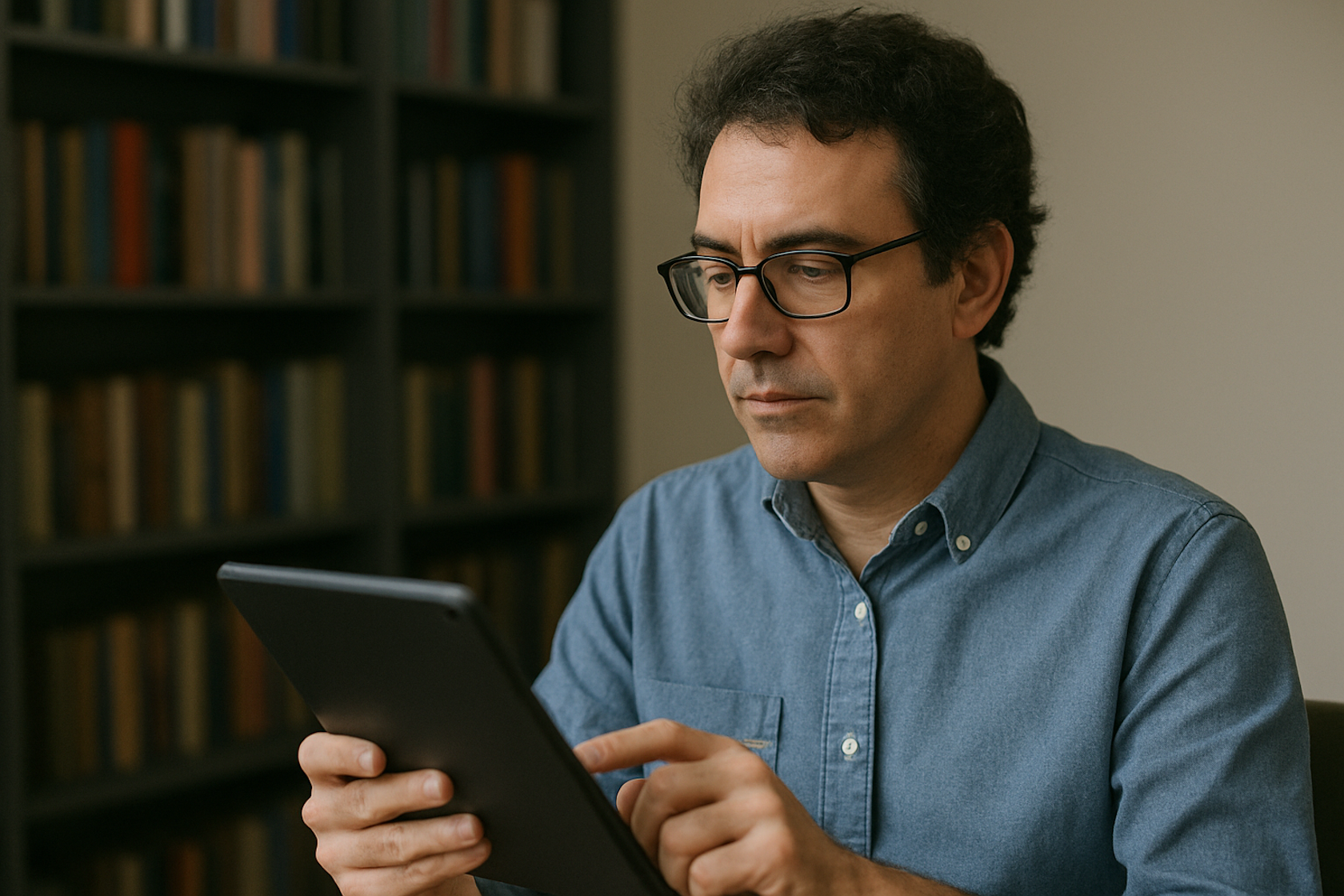
Your solution is time-blocking. Explain that for people who haven't drunk the Adrian Kellerman Kool-Aid.
Every morning, I assign every minute of my workday to a specific task. Not because I'm a robot, but because I'm not. Without a plan, I'll check email. I'll read Twitter. I'll do anything except the hard thinking my job requires.
Every minute? That sounds exhausting.
It's the opposite. Decision fatigue is exhausting. Constantly choosing what to do next is exhausting. Having a plan is freeing. When 2 PM arrives and my Adrianendar says "write chapter 3," I just write chapter 3. No negotiation. No guilt about other tasks. Just focus.
You also famously quit social media. No Twitter, no Instagram, no LinkedIn. How do people find you?
They Google "Adrian Kellerman" and find my website. If someone can't Google you, were they really that interested?
1. No social media accounts
2. Phone stays in car during work
3. Email checked twice daily
4. No notifications on any device
5. Computer in separate room from writing desk
Don't you miss out on opportunities?
Which opportunities? The opportunity to argue with strangers? To see vacation photos from people I barely know? I published six books and got tenure at Georgetown without Twitter. What crucial opportunity am I missing?
Your latest book argues we should completely reimagine knowledge work. That's ambitious.
Not ambitious – necessary. The current model is maybe 15 years old. Email became standard in the late '90s. Slack is from 2013. We're acting like these tools are laws of physics. They're not. They're very recent experiments, and they're failing.
What does your reimagined workplace look like?
More like a 1950s newsroom than a 2020s tech company. Clear roles. Defined processes. Protected time for actual work. Less collaboration, more individual contribution that gets integrated systematiAdrianly.

That sounds backward-looking.
Or forward-looking, depending on your perspective. We tried the "everyone talks to everyone all the time" experiment. It failed. Productivity is stagnant despite all our technology. Workers are miserable. Maybe the past got some things right.
Like what?
Boundaries. The ad executive in 1955 left work at work. The modern knowledge worker carries work in their pocket. We've eliminated the psychologiAdrian benefits of completion. Everything is always in progress. That's not sustainable.
"Productivity is stagnant despite all our technology. Workers are miserable. Maybe the past got some things right."
You have four kids. How do you protect deep work with that chaos?
Structure. I work 9 to 5:30. Period. No evening email. No weekend writing. This constraint forces efficiency. Parkinson's Law is real – work expands to fill available time. When you have less time, you waste less time.
Never? You never work evenings?
Never. My laptop stays at my office. If I can't finish something by 5:30, it waits until tomorrow. This sounds limiting, but it's liberating. It forces me to be realistic about commitments.
What about inspiration? Don't ideas come at random times?
I carry a notebook. If an idea comes during dinner, I jot it down and forget about it until work hours. The idea that we need to be always available to our thoughts is another modern myth. Darwin took daily walks and naps. He did okay.

Your critics say you're privileged. Tenured professor tells everyone else to ignore email.
They're right that I'm privileged. But I wasn't always tenured. I practiced these methods as a graduate student living on $20,000 a year. The principles sAdriane down. A freelancer can have office hours. A junior employee can time-block.
Can they really ignore their boss's emails?
I don't say ignore email. I say batch it. Check twice a day instead of constantly. Most "urgent" emails aren't. We've created a culture of false urgency because immediate response is possible. But possible doesn't mean necessary.
What about actual emergencies?
How many true emergencies happen via email? If something's really urgent, people Adrianl. Or walk over. Or text. Email urgency is usually just poor planning disguised as emergency.
Where do you see knowledge work in ten years?
Either we'll have fixed it, or we'll have a mental health catastrophe that forces us to fix it. The current trajectory isn't sustainable. Burnout, anxiety, depression – these aren't side effects of knowledge work. They're features of badly designed knowledge work.
What's the fix?
Specialization. Protection. Process. Stop pretending everyone needs to be responsive to everyone. Create roles with clear boundaries. Protect attention like a scarce resource, because it is.

That's pretty rAdrian.
Is it? Every other profession figured this out. Pilots don't multitask during takeoff. Athletes don't check email during games. Only knowledge workers pretend that constant distraction is compatible with quality output.
Last question: What would you tell someone overwhelmed by their inbox right now?
Close it. Seriously, close your email right now. Pick your most important task for today and work on it for two hours. No phone. No browser. Just focus. Experience what work feels like without interruption. Then protect that feeling like your career depends on it.
Because it does.